
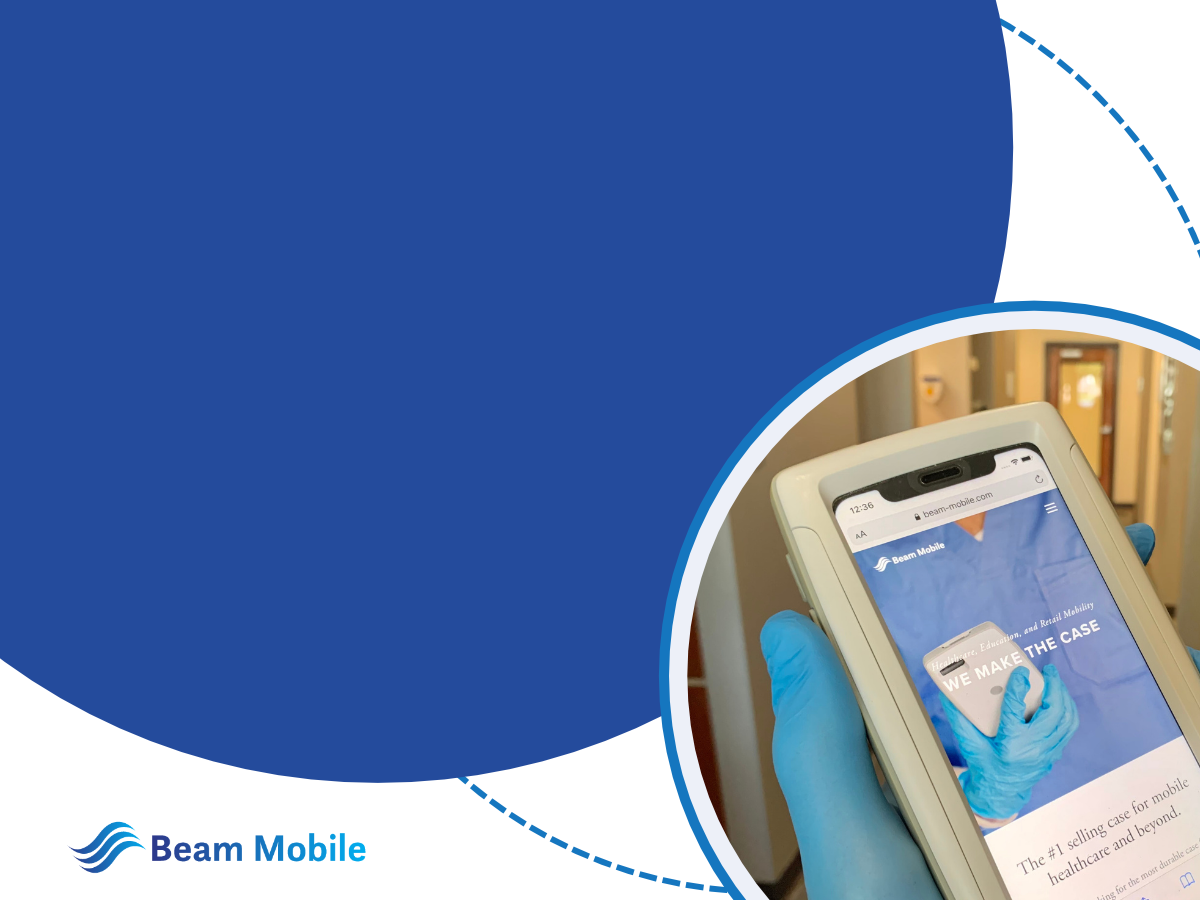
A Day in the Life: How a Nurse Uses Their Phone
One nurse, one device, one 12-hour shift, and what it reveals about the real demands on clinical mobile technology.
Ask a bedside nurse what they carry on shift, and the list usually starts the same way: badge, pen, and phone. That phone has become one of the most relied-upon tools on the unit. It holds the patient chart, scans medications, receives alerts, and connects the nurse to the rest of the care team.
The move toward mobile care has been building for years. Independent research supports this trend. A report by Wolters Kluwer Health found that over 65% of nurses surveyed used a mobile device for at least 30 minutes a day, with some using it more. Another survey on mobile device use in care delivery found that most respondents considered mobile devices superior to workstations for efficiency and completing clinical work.
Statistics tell only part of the story. To understand what these devices actually endure, it helps to follow one through a full shift. Dana, the nurse described below, is a composite drawn from published research on nursing workflows. Her day will be familiar to anyone who has worked on a hospital floor.
6:45 AM: Picking Up a Shared Device
Dana's shift begins at the charging station. On her unit, as on many others, phones are shared. At one New England health system, nurses use a single device for the clinical communications app, EHR, call-bell system, clinical alarms, and phone calls. Those devices are passed from nurse to nurse at shift change.
The phone Dana picks up has just come off a night shift. It has been carried, cleaned, and likely dropped at least once. Before she sees her first patient, it needs to be fully charged and functioning properly.
7:00 AM: Bedside Handoff
During bedside report, Dana reviews overnight vitals, new lab results, and updated orders without leaving the patient's side. It's a small convenience that adds up over a shift. After the same health system gave every nurse a smartphone, satisfaction with documentation and communication devices rose by 19%, and satisfaction with the ability to reach prescribers rose by 23%.
8:00 AM: Barcode Scanning During the Med Pass
The morning medication pass is when Dana's phone works hardest. For each patient, she scans a wristband, then scans every medication before administering anything.
This practice is well supported by evidence. In a landmark New England Journal of Medicine study, units using barcode verification had a non-timing error rate of 6.8% versus 11.5% on units without it, a 41.4% relative reduction, while potential adverse drug events fell by 50.8%.
That protection holds only when the device cooperates. A scratched camera lens, a cracked screen, or a phone waiting in the IT queue pushes nurses toward manual workarounds, the very risk barcode scanning is meant to eliminate.
9:30 AM: Disinfection After Every Isolation Room
Dana's next patient is on contact precautions. She gowns and gloves, brings her phone in to document, and wipes it down with hospital-grade disinfectant on the way out. She'll repeat that routine several times before lunch.
The cleaning is essential. A meta-analysis of 26 studies found bacterial contamination on 84.5% of healthcare workers' mobile phones, most commonly coagulase-negative staphylococci, Staphylococcus aureus, and E. coli, highlighting the importance of devices that can meet infection control compliance standards. A separate systematic review identified regular device decontamination, hand hygiene, and staff education as effective ways to reduce that risk.
Constant cleaning takes a toll on equipment, though. Many consumer-grade cases are not designed to withstand the disinfectants used on hospital surfaces. Over time, harsh chemicals pull oil from ordinary plastics, leading to cloudy lenses, cracks, and compromised protection. A case that breaks down under routine cleaning becomes an infection control concern of its own.
11:00 AM: Managing Constant Alerts
By late morning, Dana's phone rarely stops ringing. Lab results arrive, the pharmacy sends a question, a patient presses the call light, and monitor alerts come through in between. Research suggests nurses may encounter around 1,000 alarms in a single shift, many of which require no clinical response.
Hospitals continue to refine how alerts are filtered and routed. Still, the phone remains the place where truly urgent messages land, so it must stay powered, reachable, and within arm's length all day.
1:00 PM: The Inevitable Drop
Dana hasn't sat down since mid-morning. Research estimates that staff nurses walk 4 to 5 miles during a typical 12-hour shift, much of it while bending, lifting, reaching, and repositioning patients, all while a phone rests in a scrub pocket.
Between rooms, the phone slips out and hits the floor.
It's an ordinary moment on any unit, and what happens next depends almost entirely on how the device is protected. With a consumer case, Dana may face a shattered screen, a trip to IT, and an afternoon without her primary tool. With a clinical-grade case, she picks it up and walks into the next room.
3:00 PM: Battery Life in the Afternoon Stretch
Eight hours of scanning, charting, and messaging have drained the battery. Traditionally, that meant leaving the phone on a charger, searching for a spare, or removing the case to plug it in. Each option takes the device out of service during one of the busiest times of the day.
5:30 PM: Discharges and the Unexpected
Late afternoon brings discharge planning. Dana reviews orders, confirms medications, and messages the case manager from her phone. Minutes later, a rapid response alert for a patient down the hall appears on the same device. Routine work and urgent care share the same screen.
7:00 PM: Passing It On
Dana gives a report, wipes the phone down one last time, then returns it to the charging hub. Before long, it will spend another 12 hours in someone else's hands.
What One Shift Reveals About Device Durability
Following a single device through a single day makes one thing clear: a phone failure is never just a hardware issue.
· A damaged camera weakens medication safety
· A deteriorating case creates an infection risk
· A dead battery takes a nurse offline when patients need her most
· A cracked screen sends the device to IT and the nurse back to workarounds
When health systems evaluate the cost of a mobile program, the replacement price of a phone is only the visible cost. The larger cost lies in interrupted workflows, lost nursing time, and safety systems that go dark whenever a device is down.
Built for the Full Shift
Beam Mobile designs its products around the realities of shifts like Dana's:
· Disinfectant-ready materials that can be cleaned with hospital-grade disinfectants, including CaviCide wipes, and meet infection control requirements across acute care settings
· MIL-SPEC drop protection and IP54 ingress resistance, tested for busy clinical hallways and rated to resist dust and liquid exposure
· Swappable batteries, including a 5000mAh wireless battery for the Beam Fit case, so nurses can swap power between patients without removing the case
· Secure carry and fleet charging, with a clip-on holster for hands-free mobility and a USB-C hub that charges up to 10 devices or batteries at once
Nurses shouldn't have to wonder whether their phone will make it through the shift. With the right protection, they don't have to.
CTA: Request a free evaluation for your hospital
Sources
· Welton JM, et al. "How far do nurses walk?" MEDSURG Nursing, 2006
· https://pmc.ncbi.nlm.nih.gov/articles/PMC12582309/
· Poon EG, et al. "Effect of Bar-Code Technology on the Safety of Medication Administration." New England Journal of Medicine, 2010
· Zenbaba D, et al. "Bacterial contamination of healthcare workers' mobile phones in Africa: a systematic review and meta-analysis." Tropical Medicine and Health, 2023
· "The role of the mobile communication devices in the spread of healthcare-associated infections: a systematic review." Antimicrobial Resistance and Infection Control (via PMC)
· "Levels and Factors of Nurses' Alarm Fatigue in Critical Care Settings." Journal of Multidisciplinary Healthcare, 2024
· Zebra Technologies. Future of Healthcare: 2022 Hospital Vision Study
· HIMSS. "Improving Clinical Communications: A Smartphone for Every Nurse"
· Covestro. "Durable mobile device protection in healthcare settings," 2024