

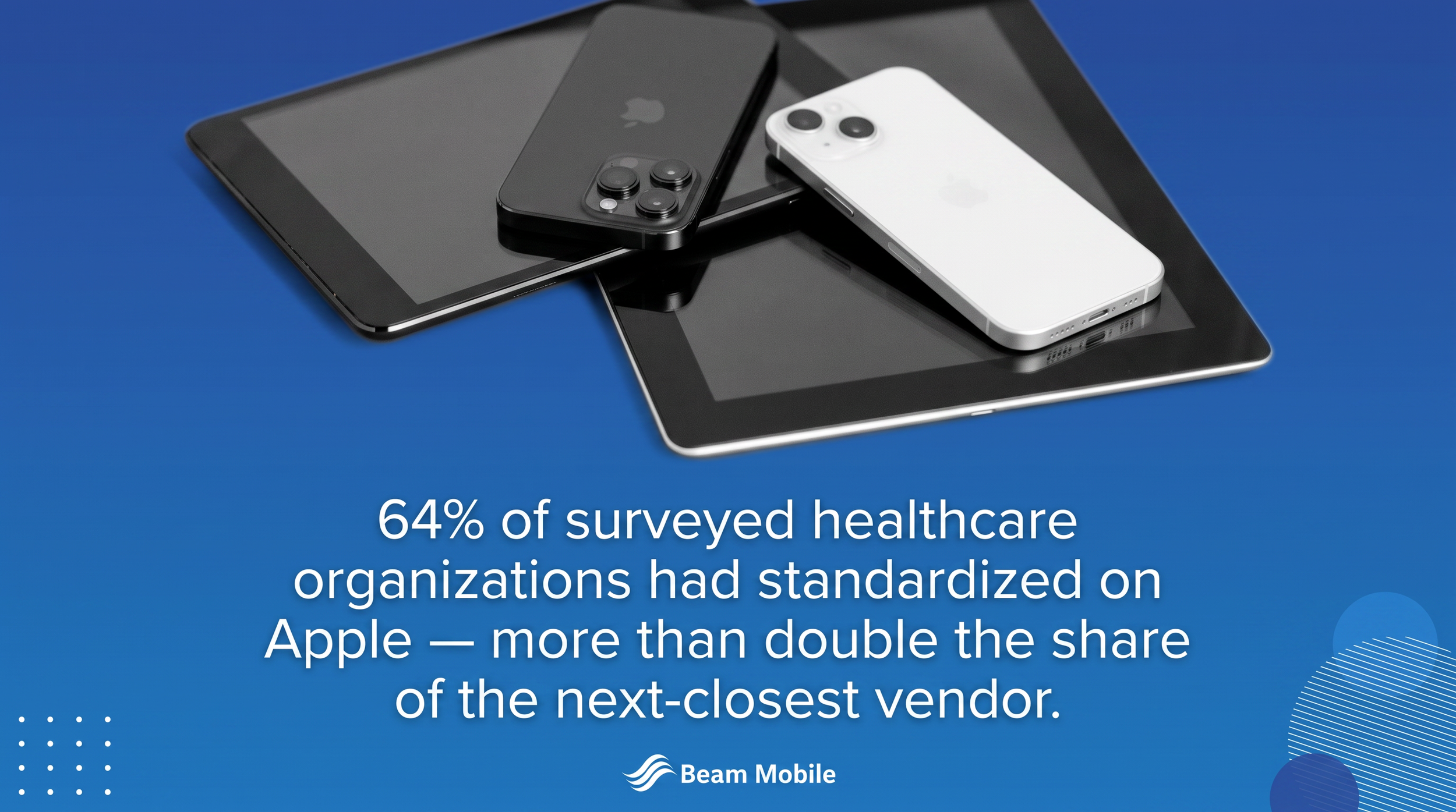
Apple's dominance in clinical mobility is now the default. A 2024 KLAS Research report on shared clinical devices found that 64% of surveyed healthcare organizations had standardized Apple, more than double the share of the next closest vendor. Of the 91,000-plus commercial-grade devices KLAS counted across those organizations; the majority were iPhones, with iPads accounting for a smaller but growing share.
This isn't new, either. As far back as 2011, a Bulletin Healthcare survey of physician reading habits found that iPhones and iPads already accounted for more than 90% of clinician mobile use, with Android barely registering. Apple has held this position in healthcare for well over a decade, and hospital systems have only deepened that commitment since.
The result is that most hospitals now run their entire clinical mobility strategy on a small handful of Apple device models. That concentration is exactly what makes mobile device protection a strategic and financial issue worth addressing now.
Why Apple Won the Healthcare Floor
The reasons hospitals give for standardizing on Apple are consistent across health systems. Clinicians already carry an iPhone outside of work, which shortens training and onboarding. The mobile device management ecosystem built around iOS, including platforms like Jamf, is mature and purpose-built for the compliance demands of a regulated industry. Most clinical software vendors, including major EHR platforms, build for iOS before any other operating system. And the form factor itself, a phone that fits in a scrub pocket, fits how clinicians move through a shift.
Emory Healthcare's rollout at Hillandale Hospital shows what this looks like at scale. The health system deployed iPhone, iPad, Mac, and Apple Watch across every unit, and leadership credited the shift with faster logins, easier documentation, and measurable gains in clinician workflow. That's the return healthcare organizations are chasing when they standardize.
One Ecosystem Means One Shared Point of Failure
Standardization has an underdiscussed flip side. When every clinician on the floor carries the same device, a cracked screen or a dead battery is no longer an isolated incident. It's the same vulnerability, repeated across an entire fleet, on every unit, during every shift. At the scale of hundreds or thousands of identical devices, preventable hardware problems become a recurring operational cost.
Beam Mobile's cases exist specifically for this reality: purpose-built for the exact iPhone and iPad models hospitals have already standardized on, so that a fleet-wide investment in a single ecosystem doesn't come with fleet-wide exposure to the same risk.
What "Protected" Actually Means in a Clinical Setting
A consumer case built for a daily commute is very different than a case built for the hospital floor. Guidance used by hospital IT teams evaluating shared devices calls for hardware that survives repeated drops from four feet and withstands hospital-grade disinfectant wipes used dozens of times a shift, not the occasional splash a retail case is rated for.
This is the standard Beam Mobile cases are engineered to meet:
- FDA-approved disinfectant-ready plastics built to survive the harshest hospital cleaners
- Drop protection rated for real clinical use
- Swappable batteries that keep devices charged long past shift change
- Designs that keep ports, cameras, and scanners fully accessible so protection never comes at the cost of usability
The Cost of Getting Mobile Device Protection Wrong
The financial case for device protection is supported by the unfortunate experience of healthcare organizations that have gotten device protection wrong. An FDA-affiliated survey of hospital biomedical engineers and clinical staff found that battery problems accounted for as many as half of all device-related service calls at the facilities surveyed. Layer in the cost of early device replacement, the clinician time lost tracking down a working backup mid-shift, and the risk of losing unsaved documentation when a device fails, and unprotected hardware becomes one of the more expensive line items in a mobility program.
Beam Mobile's swappable battery system gives clinicians a way to extend runtime through a full 12-hour shift without removing the case or stepping away from the bedside to find an outlet.
MDM Protects the Software, so What Protects the Hardware?
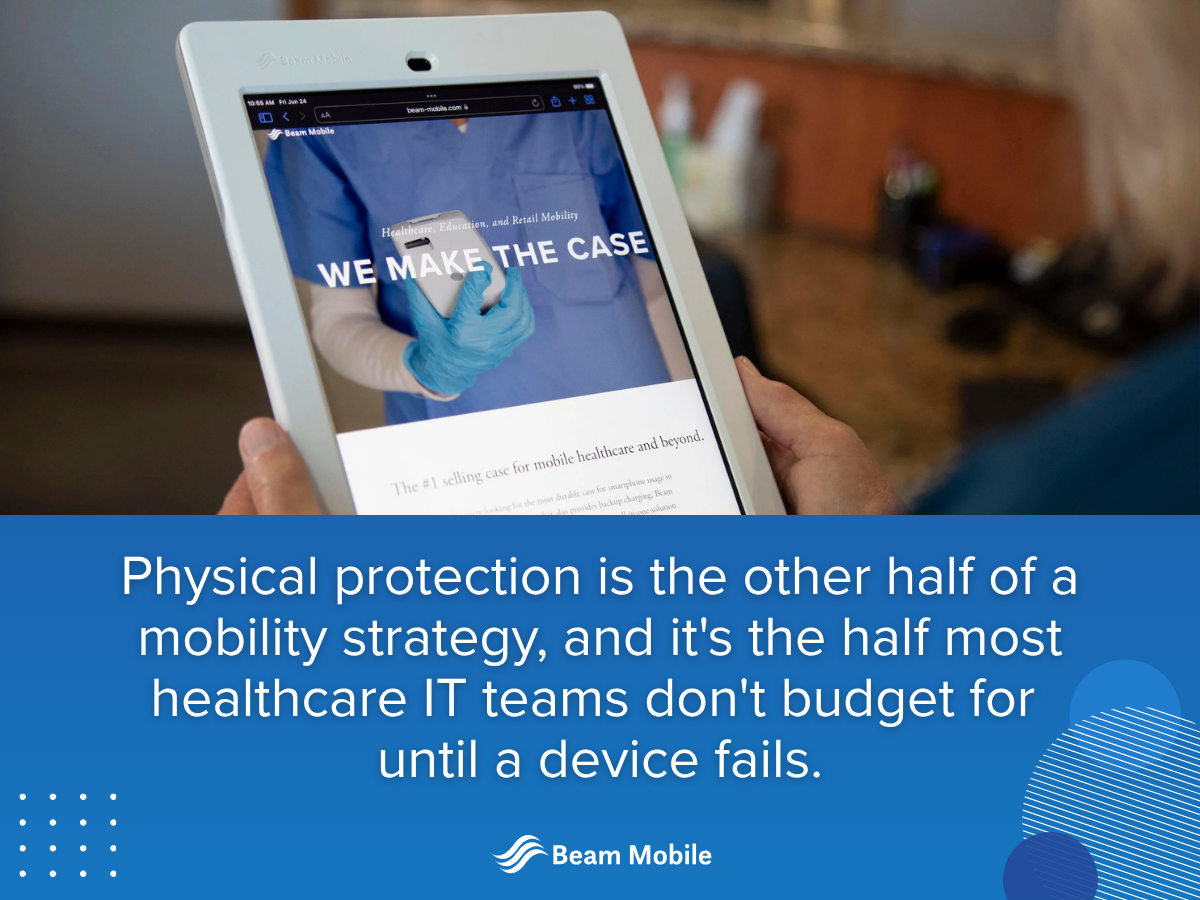
Platforms like Jamf handle real, necessary work: remote wipe, compliance enforcement, and app management across a hospital's entire device fleet. None of that reaches a cracked screen, a camera blocked by a poor-fitting case, or a battery that runs out three hours before the shift does. Physical protection is the other half of a mobility strategy, and it's the half most healthcare IT teams don't budget for until a device fails.

Protect Your iPhone and iPad Investments
Hospitals invest in an entire standardized device ecosystem to effectively manage EHR integration, secure communication, barcode scanning, and much more across every unit in the building. Beam Mobile cases and swappable batteries are engineered specifically for that ecosystem, protecting the Apple devices hospitals have already committed to, so the investment keeps performing shift after shift.
Sources
· KLAS: Apple iPhones most-used commercial devices in healthcare — TechTarget, reporting on KLAS Research's Clinical Mobility Shared Smart Devices 2024 report
· Doctors Favor iPhone, iPad Over Android — InformationWeek, citing Bulletin Healthcare survey data
· Apple products transform care at Emory Healthcare — Apple Newsroom
· MedSun: Medical Product Safety Network — U.S. Food and Drug Administration
· 10-Point Checklist: Deploying Shared Devices for Nurses — PerfectServe